Research-based buying guide

Beat the Damp: Heated Airers That Actually Dry Your Washing

Four honest picks for British winter laundry — with the running-cost maths to back them up.

Compare products

As Amazon Associate we earn qualifying purchases. Links marked 'View on Amazon' affiliate links.

Our Picks

Compare Best Heated Airers for Damp Winters

Research-based product information, not hands-on testing or a measured ranking. Check exact model details before buying.

At a glance
Pick Best for Rating View
#1 Neo XL Large Indoor Electric 3 Tier Airer Folding Foldable Laundry Clothes Horse Portable Heated Rail Rack Dryer Cover 36 Rails 147 cm… Families drying daily loads who have the floor space to spare. 8.8/10 View
#2 Rediffusion Clothes Airer, Winged, Electric, 18 Heated Rails, 12m Hanging Space,15kg Weight Capacity, Indoor Airer, Energy Efficient, 148 x 93 x 54cm, Silver - REDH02 Buyers who want concrete load numbers and a traditional winged shape. 8.4/10 View
#3 Heated Clothes Airer with Cover,Heated Drying Rack,for Damp Weather Anyone who wants the cover advantage without a big three-tier frame. 7.2/10 View
#4 Airer Heated Winged Clothes Airer | Aluminium Clothes Drying Rack 230w Energy-Efficient 18 Heated Rails | Indoor Airer Low-Energy Laundry Dryer Stand Small households who want running costs they can calculate before buying. 7.9/10 View
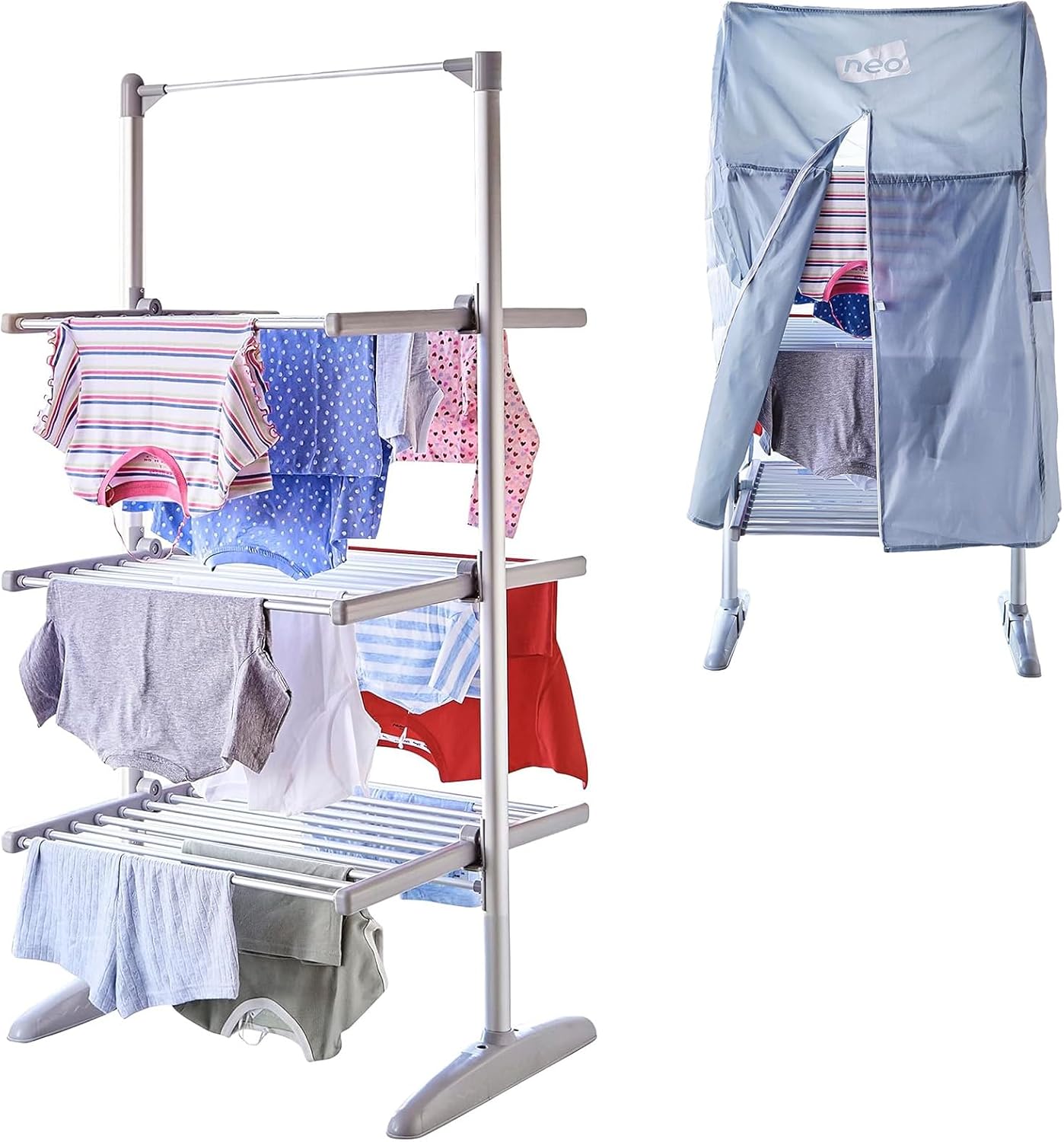
Neo XL Large Indoor Electric 3 Tier Airer Folding Foldable Laundry Clothes Horse Portable Heated Rail Rack Dryer Cover 36 Rails 147 cm…

Neo XL Large Indoor Electric 3 Tier Airer Folding Foldable Laundry Clothes Horse Portable Heated Rail Rack Dryer Cover 36 Rails 147 cm…

Families drying daily loads who have the floor space to spare.

The capacity play. Three tiers and 36 rails give it double the hanging space of every other airer here, and the included cover turns that volume into speed by trapping warm air around the load. It is the pick we would point families toward, provided there is floor space for a 147 cm frame between November and March.

Pros

  • 36 rails across three tiers — the most hanging space in this line-up by a distance
  • Dryer cover included in the box, which speeds drying over open racks
  • Folds for storage once winter loosens its grip
  • Three-tier layout keeps a big load within a modest footprint when open

Cons

  • A 147 cm open frame needs real floor space, and small flats will feel it
  • Loading three tiers takes longer than draping a single winged rack
  • No stated power draw in the listing, so running-cost maths is guesswork
View on Amazon
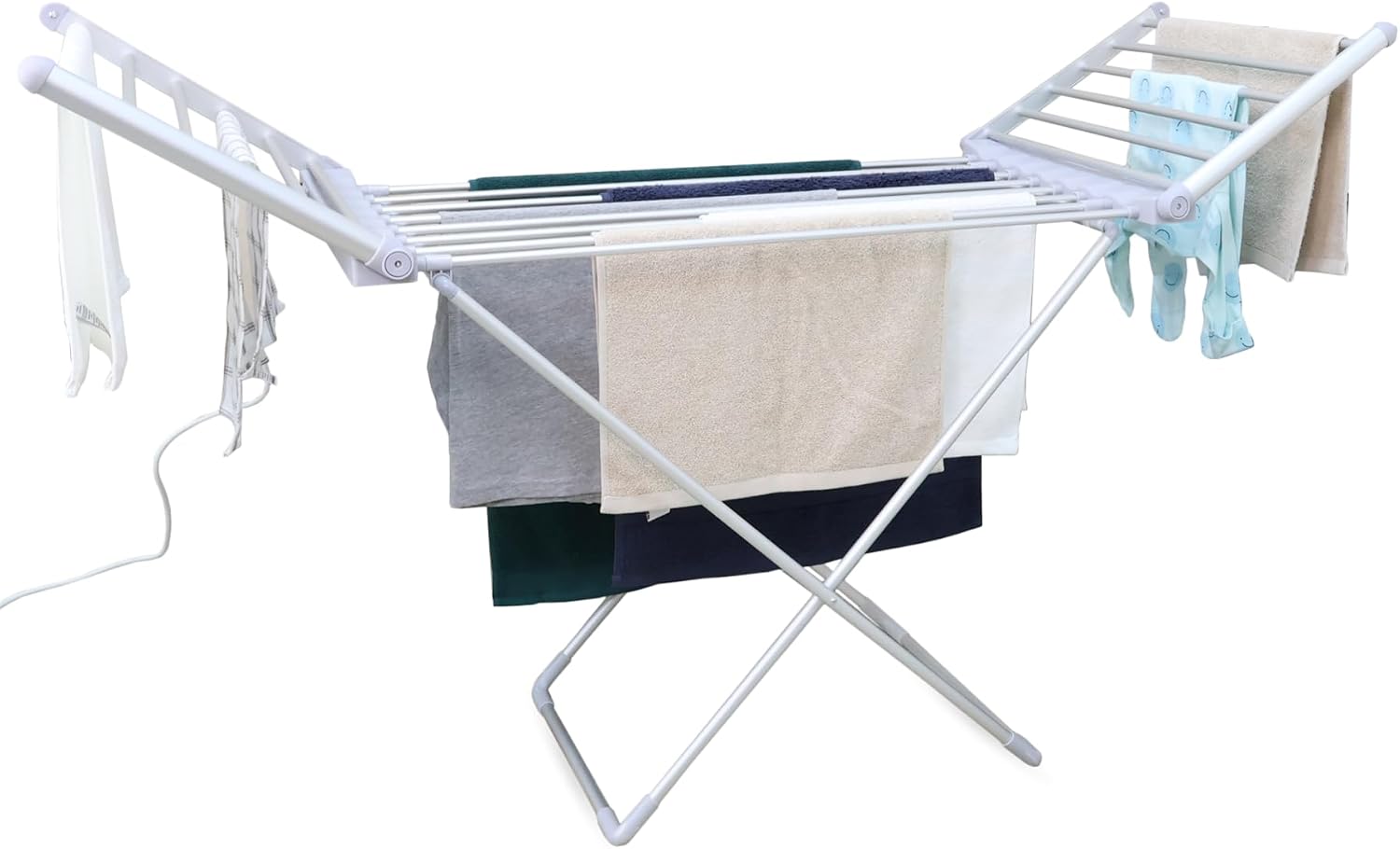
Rediffusion Clothes Airer, Winged, Electric, 18 Heated Rails, 12m Hanging Space,15kg Weight Capacity, Indoor Airer, Energy Efficient, 148 x 93 x 54cm, Silver - REDH02

Rediffusion Clothes Airer, Winged, Electric, 18 Heated Rails, 12m Hanging Space,15kg Weight Capacity, Indoor Airer, Energy Efficient, 148 x 93 x 54cm, Silver - REDH02

Buyers who want concrete load numbers and a traditional winged shape.

The spec-sheet pick. Rediffusion is the only manufacturer here willing to quote load figures — 12 metres of hanging space and a 15 kg capacity — and the winged shape opens flat for knits you would never hang. It misses the top spot for one reason: no cover in the box, and covered rivals simply dry faster.

Pros

  • Quoted 12 m of hanging space and 15 kg capacity — the only listed load figures in this line-up
  • Winged design opens flat for drying jumpers and delicates
  • Stated 148 x 93 x 54 cm dimensions make space planning simple before it arrives
  • Marketed as energy efficient, in line with the low-wattage nature of heated rails

Cons

  • No drying cover included, so it concedes speed to the covered picks
  • Open wings demand nearly a metre and a half of width
  • The energy-efficient framing is a marketing claim the listing does not quantify
View on Amazon
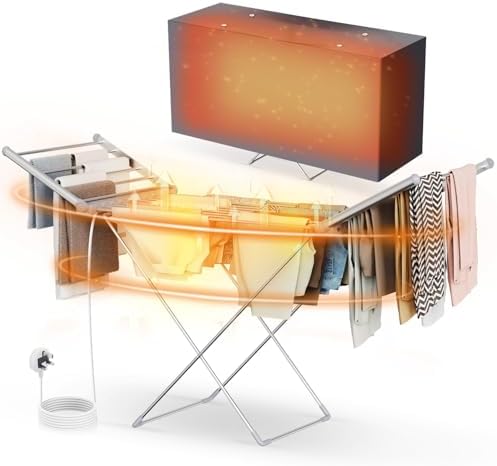
Heated Clothes Airer with Cover,Heated Drying Rack,for Damp Weather

Heated Clothes Airer with Cover,Heated Drying Rack,for Damp Weather

Anyone who wants the cover advantage without a big three-tier frame.

The simple pitch: a heated rack with a cover included, aimed squarely at damp-weather drying. The cover is genuinely the detail that matters, but the listing tells you almost nothing else — no rail count, no dimensions, no power draw — and that opacity is why it sits at the bottom of our table despite the right idea.

Pros

  • Cover included, which speeds drying over open racks
  • Pitched directly at damp-weather indoor drying
  • A simple covered design that suits small, occasional loads

Cons

  • Listing omits rail count, dimensions and power draw — you are buying on trust
  • No stated load capacity, so family-scale washing is an open question
  • Unbranded listing makes warranty and support arrangements hard to judge
View on Amazon
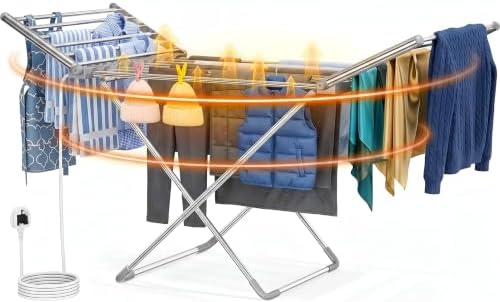
Airer Heated Winged Clothes Airer | Aluminium Clothes Drying Rack 230w Energy-Efficient 18 Heated Rails | Indoor Airer Low-Energy Laundry Dryer Stand

Airer Heated Winged Clothes Airer | Aluminium Clothes Drying Rack 230w Energy-Efficient 18 Heated Rails | Indoor Airer Low-Energy Laundry Dryer Stand

Small households who want running costs they can calculate before buying.

The transparent one. A stated 230-watt draw is the only power figure in this line-up you can actually check against your energy bill, and it makes the running-cost case without spin. The trade-offs are familiar: no cover in the box and no quoted load capacity, which keeps a solid, honest product off the podium.

Pros

  • Listed 230 W draw — the only verifiable power figure in this line-up
  • Aluminium frame reads as light and easy to move between rooms
  • Winged rails open flat for laid-flat drying of knits
  • 18 heated rails handle a normal family wash

Cons

  • No cover included, so open-frame drying is slower
  • No load capacity or hanging-space figure quoted
  • Lightweight aluminium is a claim you cannot verify from a listing alone
View on Amazon

Why a heated airer earns its floor space in a British winter

If your windows fog up the moment you hang a wash, you already know the problem: British winter air holds moisture, radiators hog the drying space, and a tumble dryer treats every load like a small energy event. A heated airer takes a different route to the same dry pile of clothes. Warm the rails, drape the fabric, and let gentle heat do what the ambient air cannot. The aluminium winged model in this line-up lists its draw at 230 watts, a small fraction of what a tumble dryer pulls for a single cycle. That gap is the entire sales pitch, and it holds up.

The catch nobody mentions is moisture. Every load you dry indoors releases its water back into the room, and in a damp house that trades one problem for another. This is why the airer-plus-dehumidifier pairing works so well: the rails drive moisture out of the fabric while the dehumidifier captures it before it settles on your windowsills. If you already own a dehumidifier, a heated airer is the natural upgrade rather than a rival purchase.

What actually separates a good airer from a clothes horse

Rail count tells you capacity at a glance. Eighteen rails, as on the Rediffusion and the aluminium winged model, handle a normal family wash; the Neo XL carries 36 rails across three tiers, double the hanging space of anything else here and enough for a bedding day without playing laundry Tetris. The Rediffusion listing goes further than most and quotes 12 metres of hanging space plus a 15 kg capacity — the only manufacturer in this line-up willing to put numbers on the promise, which earns real credit in our ratings.

A cover matters more than people expect. An enclosed airer traps warm air around the fabric instead of letting it drift into a cold room, and two of our four picks ship with one: the Neo XL and the unbranded covered rack. Wings are the other quiet advantage, opening flat for jumpers you would never hang — both the Rediffusion and the aluminium model use that shape. Folding matters too, because a 148 cm frame that will not collapse becomes permanent furniture from November to March.

The line-up, ranked and rated

Our scores are editorial judgements built from listings and manufacturer specifications — nobody on this team has lab time with these racks, and we would rather tell you that than dress a hunch as a review. The Neo XL leads at 8.8 because it pairs the biggest capacity here with a cover in the box, solving volume and speed in a single purchase. The Rediffusion follows at 8.4: quoted figures, a sensible winged shape, but no cover, and that one omission is what separates it from the top spot. The aluminium winged model takes 7.9 — at a listed 230 watts it is the easiest running-cost story to verify, though the missing cover and unstated load capacity keep it off the podium. The unbranded covered airer sits at 7.2, purely because its listing omits rail count, dimensions and power draw, and asking a buyer to commit on that little information is a stretch however friendly the checkout price turns out to be.

Running costs: arithmetic you can check yourself

Take the one power figure any of these listings commit to: 230 watts. Run that airer for four hours and you have used 0.92 kilowatt-hours — call it under one unit of electricity, whatever your supplier charges per unit. Set that against a tumble dryer cycle, which typically swallows several units before the door opens, and the economics stop being subtle. Even a heavy overnight session on the airer lands in loose-change territory rather than the per-cycle dread that makes people ration the dryer.

One honest caveat keeps this fair: slower drying means the meter runs longer even at a lower rate, and a cover shrinks that gap by keeping the heat where the clothes are. A cheap plug-in energy meter settles the question for your exact model in a single laundry day, and it costs less than the household argument it prevents.

Get more from whichever airer you buy

Space the garments so air can move between them — a packed rail dries from the edges inward and mocks you for hours. Use the cover if you have one, and if you do not, a fitted sheet clipped over a winged frame performs a decent impression, as generations of students can attest. Put the airer in the smallest practical room rather than the biggest, because warm air concentrated in a small space beats the same heat lost to a hallway. And if damp is the specific enemy in your house, run the dehumidifier alongside it: the airer pushes moisture out of the fabric, the dehumidifier removes it from the room, and neither has to work as hard as it would alone.

Need help?

Frequently Asked Questions

Are heated airers really cheaper to run than a tumble dryer?

On the face of it, yes, and by a wide margin. The only listing in this line-up that states a power draw puts it at 230 watts, which works out to under one unit of electricity across a four-hour session, while a tumble dryer cycle typically consumes several units. The honest trade is time: airers dry slower, so weigh the total session length against your routine rather than the hourly rate alone.

Do I need an airer with a cover?

A cover speeds drying meaningfully because it traps warm air next to the fabric instead of losing it to the room. The Neo XL and the unbranded rack include one in the box; the Rediffusion and the aluminium model do not. If you buy a coverless model, a fitted sheet draped over the frame achieves much the same effect for nothing.

Can a heated airer replace my tumble dryer?

For cottons, synthetics and everyday mixed loads, most households find it covers the job with a little planning — load it before bed and collect dry clothes in the morning. Thick towels and duvets are where patience thins, and bulky items dry far faster with a cover or a dehumidifier running alongside. Anyone with a newborn, a sport-heavy household or daily washing may still want both.

Heated airer or dehumidifier — which should I buy first?

They solve different halves of the problem, which is exactly why the pairing works. The airer puts heat directly into wet fabric; the dehumidifier strips moisture from the room and protects it from condensation and mould. If damp in the house itself is your main complaint, start with the dehumidifier; if drying speed is the frustration, the airer moves the needle first.

How much washing fits on an 18-rail airer?

The Rediffusion listing is the helpful one here: 18 rails, 12 metres of hanging space and a stated 15 kg capacity, which the manufacturer says suits a typical family wash. Treat load figures as best-case, since tightly packed items always dry slower than spaced-out ones. If you regularly dry bedding or back-to-back loads, the Neo XL's 36 rails give you headroom that 18 rails cannot.

Sources and research basis

No hands-on testing. Manufacturer and retailer statements are claims from those sources, not independently measured results. Check exact models and current terms before buying.